
Which is the best football academy in Europe: Manchester United or La Masía?
La Masía vs. Carrington: A clash of titans in football player development
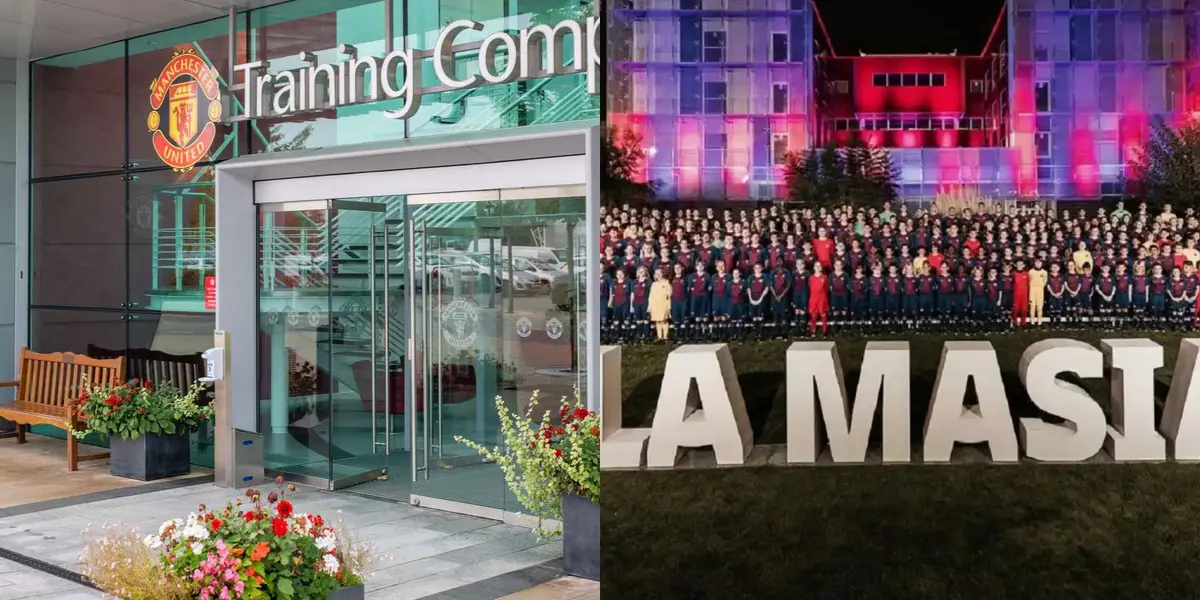
In the world of football, youth academies stand as fundamental pillars for talent development and the sustainability of clubs. Manchester United and FC Barcelona, two giants of global football, have cultivated player development models over the years that have yielded extraordinary results. Carrington and La Masía, names that resonate strongly in the football universe, are much more than just facilities; they are the crucible where the stars of tomorrow are forged.
In this article, we will delve into a comparative analysis of these two youth academy models, exploring their philosophies, methodologies, and the emblematic players who have emerged from their ranks. We will also examine how other renowned European clubs, such as Ajax Amsterdam and Olympique Lyon, have implemented different but equally successful approaches in the formation of young talents.

The Carrington model of Manchester United: Forging legends in the cradle of english football
Carrington, the Manchester United academy, is a symbol of tradition and excellence in English football. Founded in the 1950s, this academy has been the cradle of countless footballers who have left an indelible mark on the history of the club and the sport. From the "Busby Babes" to the golden generation of the 90s, Carrington has been the stage where legends such as David Beckham, Paul Scholes, and Ryan Giggs have been forged.
Carrington's philosophy focuses on the integral development of players, both in the sporting and personal aspects. A dynamic and offensive style of play, characteristic of Manchester United, is promoted, and values such as discipline, teamwork, and commitment to the club are instilled.
Throughout its history, Carrington has produced a plethora of players who have reached the elite of world football. Some of the most prominent names include David Beckham, Paul Scholes, Ryan Giggs, Gary Neville, Phil Neville, Nicky Butt, Marcus Rashford, and Alejandro Garnacho. These footballers have not only shone at Manchester United but have also represented their national teams in high-level competitions.

La Masía of FC Barcelona: A model of global success based on positional play
La Masía, the FC Barcelona academy, is recognized worldwide for its innovative approach to player development. Its methodology is based on the development of technical and tactical skills, as well as the promotion of an associative and possession-based style of play, known as "tiki-taka". La Masía has been fundamental in the formation of iconic players such as Lionel Messi, Xavi Hernández, and Andrés Iniesta, who have personified the style of play of Barcelona and the Spanish national team.
La Masía has been the youth academy from which numerous world-renowned footballers have emerged, including Lionel Messi, Xavi Hernández, Andrés Iniesta, Carles Puyol, Gerard Piqué, and Víctor Valdés. These players have been fundamental pillars in the successes of Barcelona and the Spanish national team in recent years.

Other european giants and their youth academies: Ajax, Lyon, Real Madrid, and more
In addition to Manchester United and FC Barcelona, other European clubs have developed successful youth academy models. Ajax Amsterdam, for example, stands out for its focus on the development of young talents and its philosophy of offensive play. Players of the stature of Johan Cruyff, Marco van Basten, and Dennis Bergkamp have emerged from its academy.
Olympique Lyon is another club that has invested heavily in its youth academy, producing players such as Karim Benzema, Alexandre Lacazette, and Anthony Lopes. Its model is based on the integral formation of players, both in the sporting and personal aspects.
Real Madrid, meanwhile, has a youth academy of great prestige, although its approach has varied over the years. Currently, the white club is committed to the recruitment of young talents at the national and international level, as well as the development of players trained in its own youth academy.
The impact of youth academies on professional football
Football youth academies not only have an impact on the formation of players but also contribute to the development of professional football as a whole. Clubs that invest in their youth academies not only obtain sporting benefits but also economic ones, since they can nurture their first teams with players trained at home or sell them to other clubs for significant sums.
In addition, youth academies play an important social role, as they provide opportunities for young talents to develop their skills and fulfill their dreams of becoming professional footballers. They also promote values such as teamwork, discipline, and respect, which are fundamental to the development of any person.
What is the best model?
There is no "perfect" or "best" youth academy model. Each club adapts its approach to its own characteristics, philosophy, and resources. However, all successful models share common elements, such as long-term investment, the integral formation of players, and the promotion of their own style of play.
In modern football, youth academies are more important than ever. Clubs that invest in the formation of young talents not only ensure their sporting future but also contribute to the development of football as a whole.
What you should know about football youth academies:
- Integral formation: Youth academies not only focus on sports development but also on the personal and academic formation of players.
- Long-term investment: The success of a youth academy requires constant investment and a long-term project.
- Identity and values: Youth academies contribute to creating an identity and their own values in football clubs.
- Economic sustainability: The formation of players in youth academies can be an important source of income for clubs.
- Diversity of models: There is no single model of successful youth academy, each club adapts its approach to its own characteristics and philosophy.
You may also be interested in


More news

The Numbers Don't Lie: Casemiro's Dominance Returns
31/03/2025
United's Dream Pairing: The Duo Fans Are Eager to See
31/03/2025

Hojlund's Fate: Will He Stay or Leave Man United?
31/03/2025

Højlund's Plummeting Value: A Cause for Concern at Man United
31/03/2025
Giggs' Misjudgement: Depay's Free-Kick Hopes Fall Flat
31/03/2025

Man United's Summer Clearout: Players on the Chopping Block
31/03/2025

Financial Divide: Man United's Value Dwarfs Olympique Lyon's Squad Cost
30/03/2025

Onana Exit Rumors Swirl: How the Goalkeeper Is Responding
30/03/2025
Eriksen breaks the silence about the rumors of not renewing
30/03/2025
World-Class Player Available: Romano Reveals Transfer Bombshell
30/03/2025

Ugarte's Premier League Insight: Key Differences From Ligue 1 Revealed
30/03/2025

Garnacho Outshines Salah and Haaland: A Stunning Statistical Triumph
29/03/2025

Ekitike's Staggering Stats: Why Man United Are Keen
29/03/2025

Beyond Legends: The United Player Who Rewrote Investment History
29/03/2025
Manchester's Goalkeeping Giants: Who Reigns Supreme?
29/03/2025
Fernandes' Fortune: Unveiling the Price Tag of United's Captain
29/03/2025
The Manchester United jewel that was rumoured for Barcelona ended up in an exotic league
29/03/2025

Father's Faith Pays Off: 100 Pound Bet on Son's United Debut
29/03/2025